 (518) 867-2592
  Open 24/7



 Tankless Installs Sized Right for Upstate Winters
Gas & Electric Tankless Units
Sized around your home's actual peak demand, not a generic square footage chart.
Gas Line & Venting Retrofits
Upsized gas lines and properly routed venting so the new unit can actually deliver what it's rated for.
 Gas & Electric Tankless Units
 Gas Line & Venting Retrofits
Tankless Water Heater Installation in Saratoga County, NY
Groundwater Here Runs Colder Than Most Spec Sheets Assume
Tankless flow ratings on the box are usually calculated against incoming water that's a lot warmer than what actually comes out of the ground in upstate New York. Manufacturers test at temperatures common in the Southeast. Saratoga County wells and municipal lines run considerably colder for most of the year, which means a unit rated for a comfortable shower down south can leave you with lukewarm water here the moment a dishwasher or washing machine kicks on at the same time.
Getting this right up front matters more than picking a brand name. An undersized unit installed correctly will still disappoint every winter morning. Sizing it against your household's coldest expected inlet temperature, not a manufacturer's best-case number, is what actually determines whether you're happy with the switch a year from now.
What Actually Changes When You Pull the Tank Out
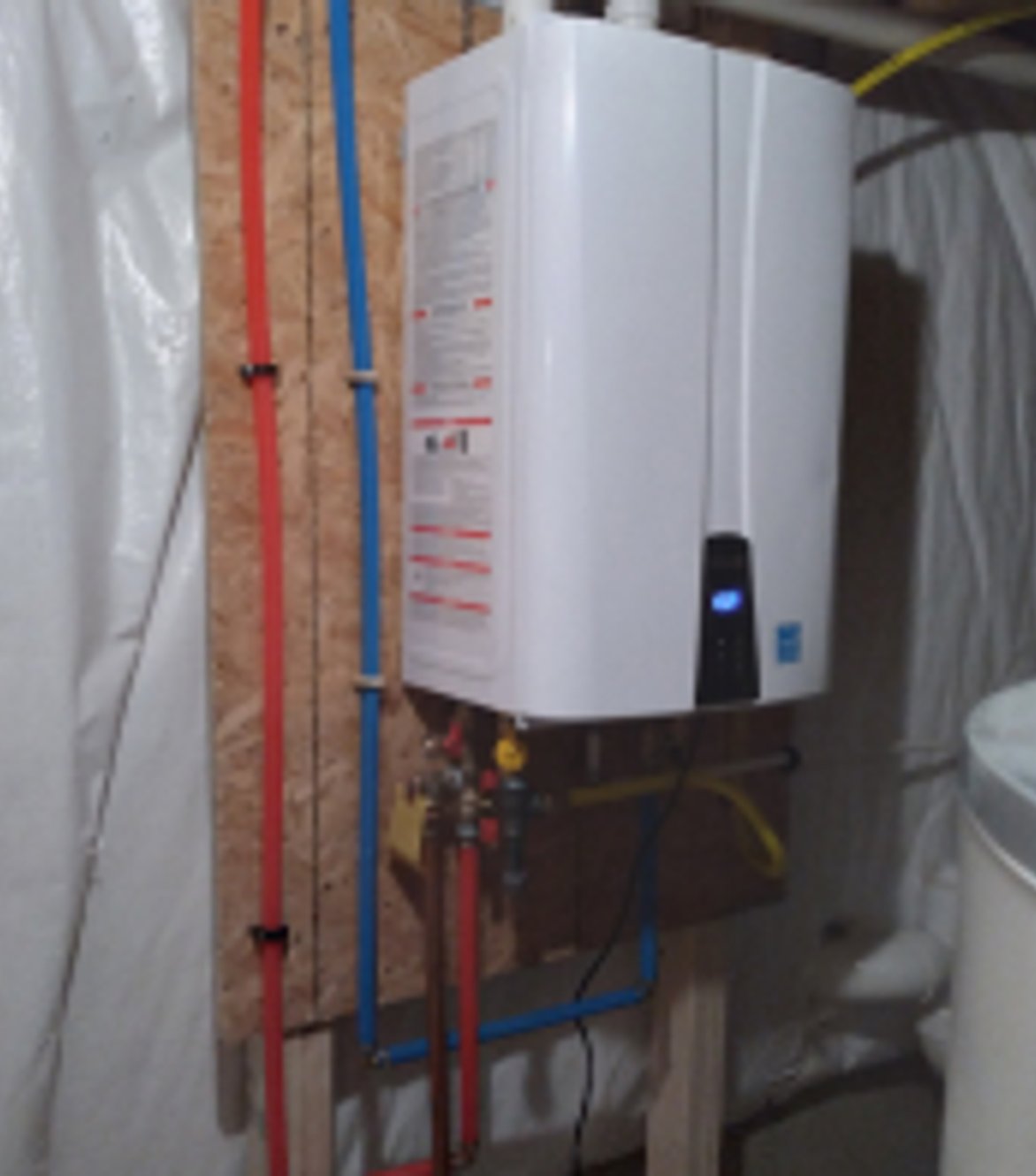
Swapping a 40-gallon tank for a wall-mounted tankless unit is not a like-for-like part replacement. Several things around it typically need attention at the same time.
- Gas line diameter, since tankless units draw a much higher BTU input than most existing tank lines were sized for
- Vent routing, because high-efficiency condensing models exhaust through PVC, not a masonry chimney
- Electrical, for ignition control and, on electric-only models, dedicated high-amp circuits
- Condensate drainage for condensing units, which produce acidic runoff that needs a proper path out
- Mounting location, freeing up floor space that a 50-gallon tank used to occupy
None of this is unusual, but skipping any one of them is how a tankless installation ends up underperforming right after it goes in.
A 1920s Saratoga Springs Cape Retrofits Differently Than New Construction in Clifton Park
Homes near downtown Saratoga Springs, including the bed and breakfasts operating out of converted Victorians, often still run on gas lines sized decades before tankless equipment existed. Getting a unit to fire at full output usually means running new gas piping to the appliance, not just connecting into whatever's already there.
Basements in these older homes were also built around a chimney that vented a standard tank, and that masonry flue is rarely rated for the temperature and moisture a condensing tankless unit puts out. A new sidewall vent run to the exterior is usually part of the job.
Newer builds out toward Clifton Park and Malta tend to have larger gas services and more panel capacity already in place, so the retrofit is often simpler and faster to complete.
How the Installation Gets Planned Before Anything Is Ordered
Before a unit gets purchased, Marc walks through how many fixtures could realistically run at once in your household. Two bathrooms showering back to back, a dishwasher, and a laundry cycle running simultaneously draws very differently than a single person living alone. That peak number, not the square footage of the house, drives which size unit makes sense.
From there, the gas meter and existing line size get checked against what the new unit will need, along with where the vent can realistically be routed. On installation day, the old tank comes out, new gas and vent lines go in, the unit gets mounted and commissioned, and water temperature gets calibrated before anyone signs off on the job.
What This Installation Does Not Include
- A full electrical panel upgrade beyond what the new unit specifically requires
- Extending gas service from the street or upgrading the meter itself
- Opening finished walls or ceilings to reroute venting through living space
If a home needs any of that before a tankless system will work properly, that gets explained during the initial walkthrough, before any equipment shows up on site.
Endless hot water sounds simple until the sizing or the gas line gets guessed at. Marc installs tankless systems throughout Saratoga County built around what your household actually uses, from historic homes near downtown Saratoga Springs to new construction in Clifton Park and Malta.
Get A Tankless QuoteTankless Installation Questions Saratoga County Homeowners Ask
A few things worth knowing before deciding whether tankless is the right move for your home.
Within the unit's rated flow, yes, it won't run out the way a tank does mid-shower. But "endless" only holds up if the unit was sized for how many fixtures your household actually runs at the same time. That's why the sizing conversation matters more than the marketing on the box.
In most homes with an existing gas tank water heater, yes. Tankless units pull significantly more BTU input to heat water on demand, and older gas lines were rarely sized with that in mind. This gets checked and priced before installation, not discovered halfway through.
Often, yes, but the venting and gas line typically need updating as part of the switch since older homes were built around a tank system. Once that's accounted for, tankless works well in older housing stock and frees up basement or closet space the old tank used to take up.
Homes on well water, common around Greenwich and Cambridge, usually need annual descaling flushes to clear mineral buildup off the heat exchanger. Skipping this is the most common reason tankless units lose efficiency or throw error codes early.